Book panel hosted by the PACT project.

 Pluralist Agreement and Constitutional Transformation
Book panel hosted by the PACT project.






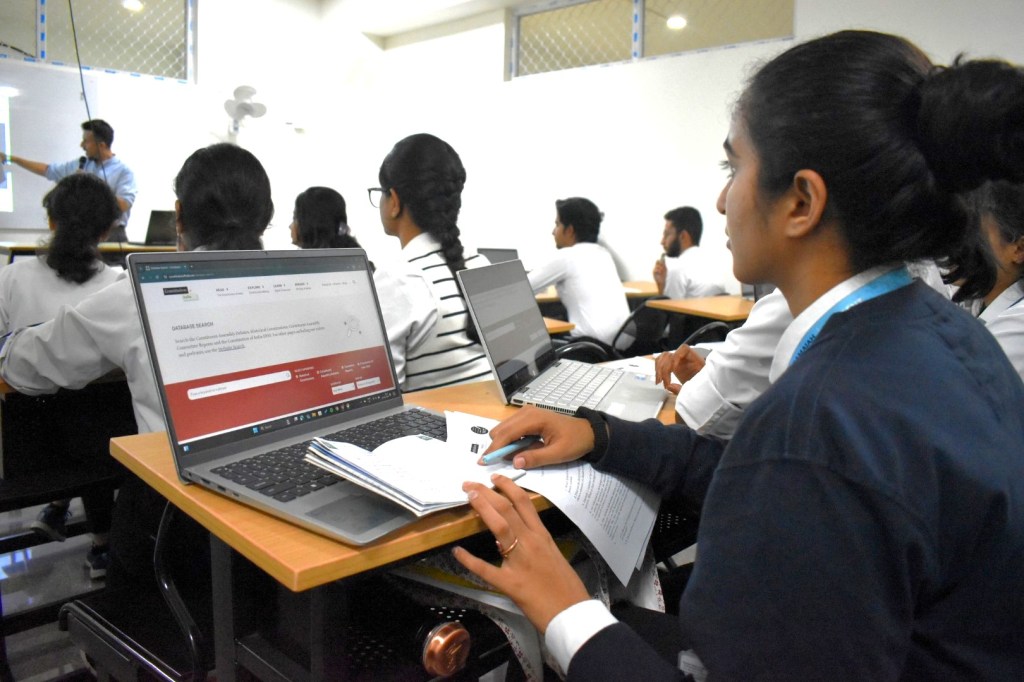


by Aiswarya Birla
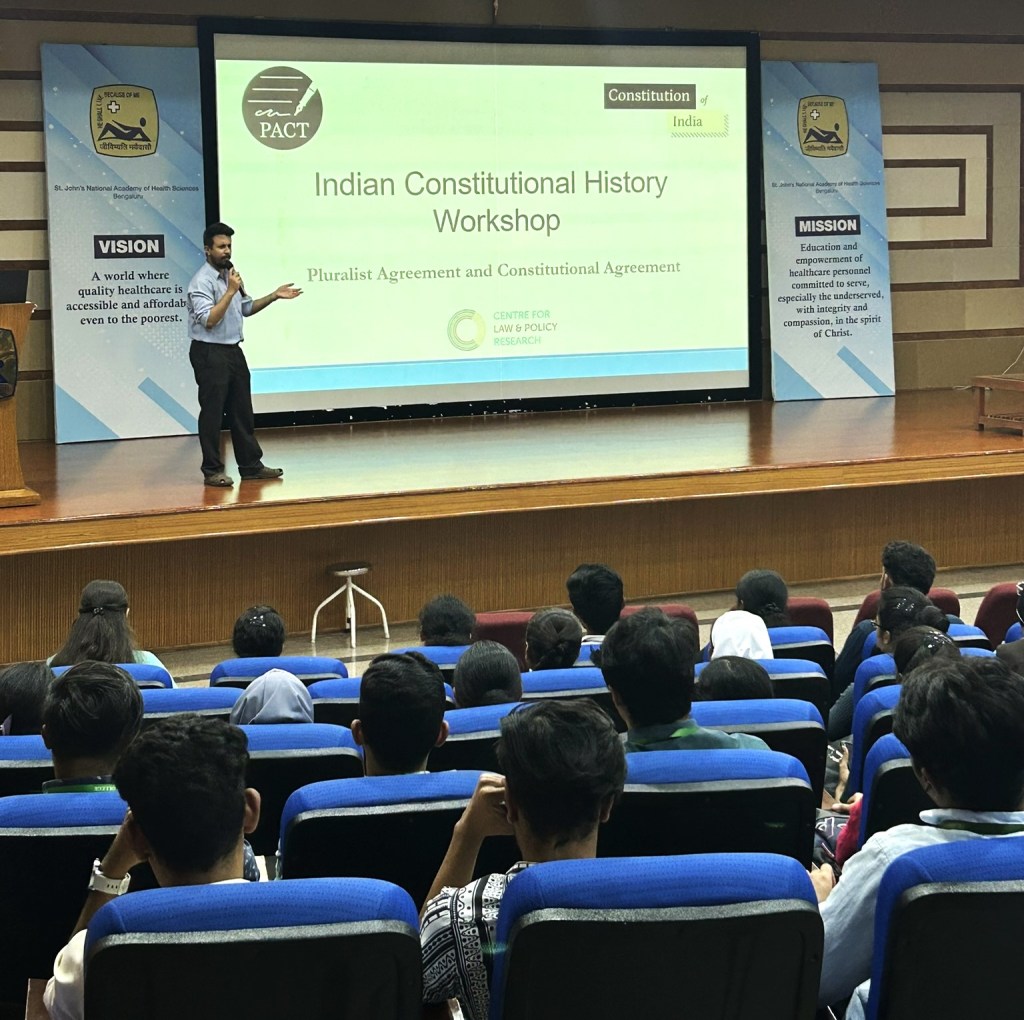
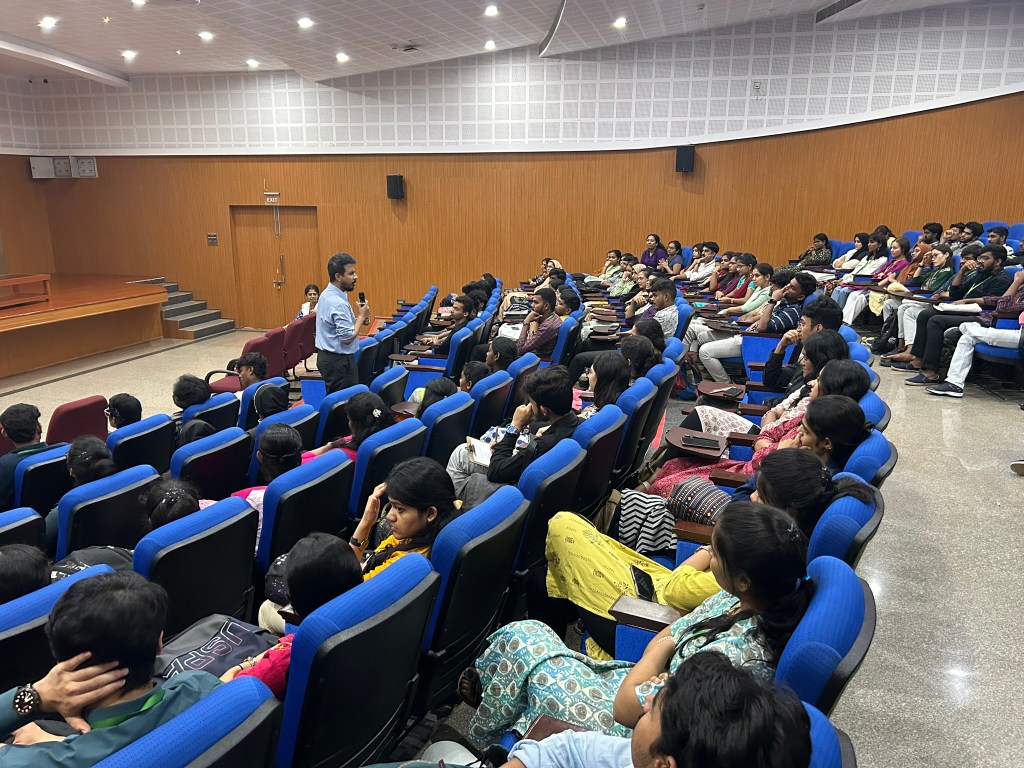
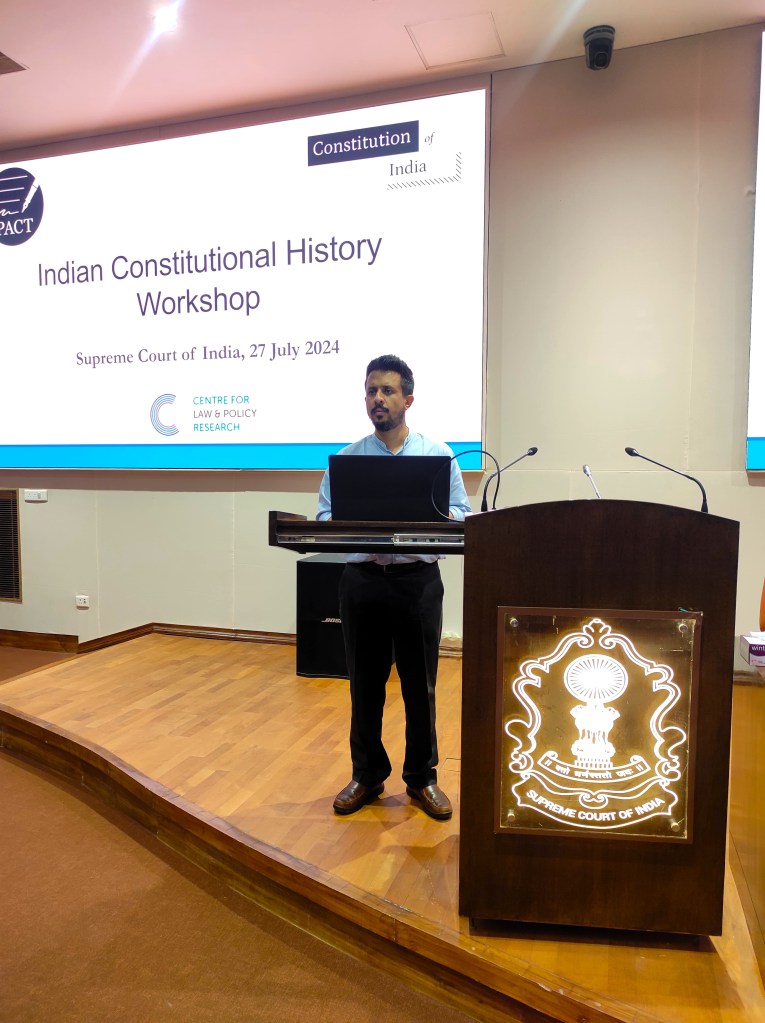
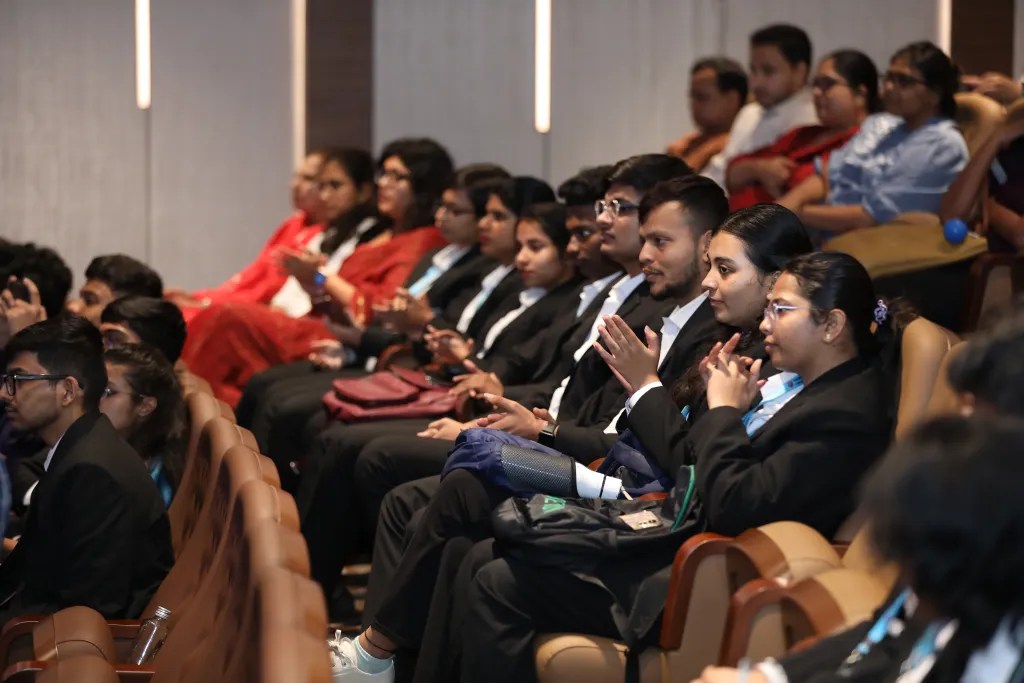
The National Law School of India University (NLSIU) organised a conference on August 2nd and 3rd, 2024, in Bengaluru as part of the Pluralist Agreement and Constitutional Transformation (PACT) project. The Conference had opening and closing keynotes by Prof Pratap Bhanu Mehta and Justice BV Nagarathna respectively, and hosted 21 panelists from India and abroad, who presented their papers across five panels.
The conference explored Indian constitution-making as a process of reaching pluralist agreement between contending actors and constitutional transformation over time It pursued PACT’s three lines of enquiry. First, what were the types of counter-majoritarian proposals put forward by advocates of individual freedoms and group rights in India between 1928-50? What were the constitutional alternatives offered by those outside the Constituent Assembly? Second, what was the relationship between the procedures adopted in the Indian Constituent Assembly’s deliberations, and its outcomes with regard to pluralism? How did the division of the Assembly’s work into various committees, decision making processes and the timing and sequencing of proposals enable or hinder the accommodation of diversity? Third, what forms of participation and civic engagement are enabled by the extensive constitutional archive available today? In what ways is this archive used to bolster contemporary appeals to constitutional values and principles?
The Conference opened with a keynote address by Prof Pratap Bhanu Mehta who is the Laurence S. Rockefeller Visiting Professor for Distinguished Teaching at Princeton University. He began his lecture by pondering on the tension between constitutionalism and pluralism, as constitutionalism often implies a kind of atemporal authority that seems incompatible with the pluralist view of diverse, evolving values. He noted that while constitutions are historical documents influenced by particular contexts, they are often presented as timeless and immutable. This paradox is highlighted through examples like the Indian slogan “Save the Constitution,” reflecting a desire to preserve something perceived as eternal despite its historical contingencies. He instead argued that despite claims of an end to ideological contention, liberal constitutions often embody a kind of atemporal authority, making radical change seem daunting.
Prof Mehta then spoke about how modern liberal constitutionalism tends to focus on formal political equality and individual rights, often sidelining the representation of social power and pluralism. He questioned how this form of constitutionalism accommodates pluralism, given its emphasis on individual freedom and equality. He suggested that while liberal constitutions advocate for individual freedoms, they do not necessarily represent or accommodate pluralism in a comprehensive way. Instead, pluralism may emerge from the exercise of individual freedoms rather than being actively represented by the constitution.
Prof Mehta ended his address with a reflection on the concept of the constitution as a performative act, akin to a ritual that needs to be continuously reenacted to maintain its authority.
After opening and welcome remarks by Prof Rochana Bajpai and Prof Sudhir Krishnaswamy, , the day kicked off with its first panel, Studying India’s Constitutional Founding: Methods and Archives, moderated by Sidharth Chauhan from NLSIU. The panel featured the following papers
The next panel of the day, Key Constitutional Choices: Democracy, Federalism and Social Transformation, took place with Karthick Ram Manoharan from NLSIU as the discussant. The panel featured the following papers.
The last panel of the day, Forgotten Histories of Constitution Making, had Sanjay Jain from NLSIU as the discussant. The panel featured:
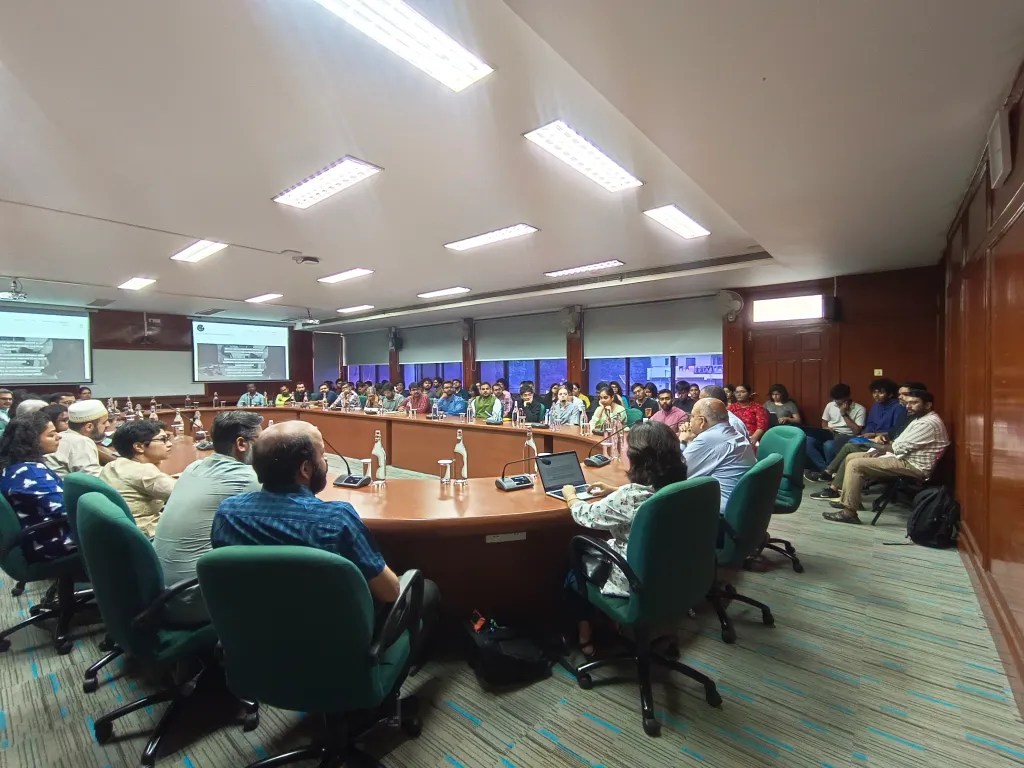


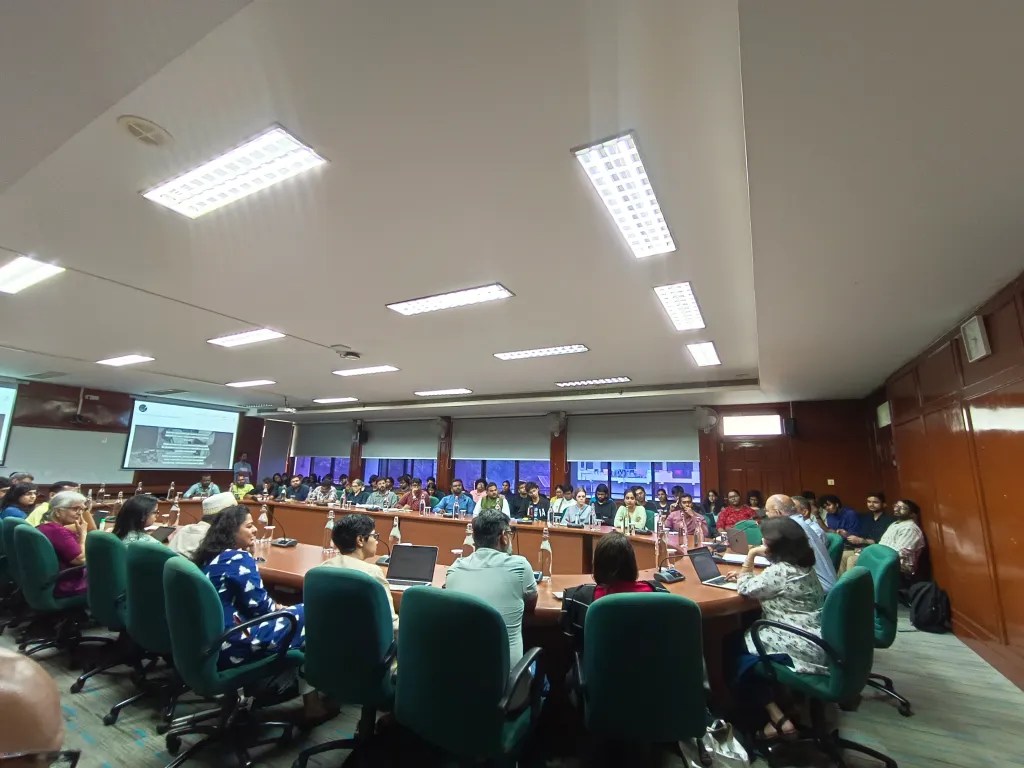


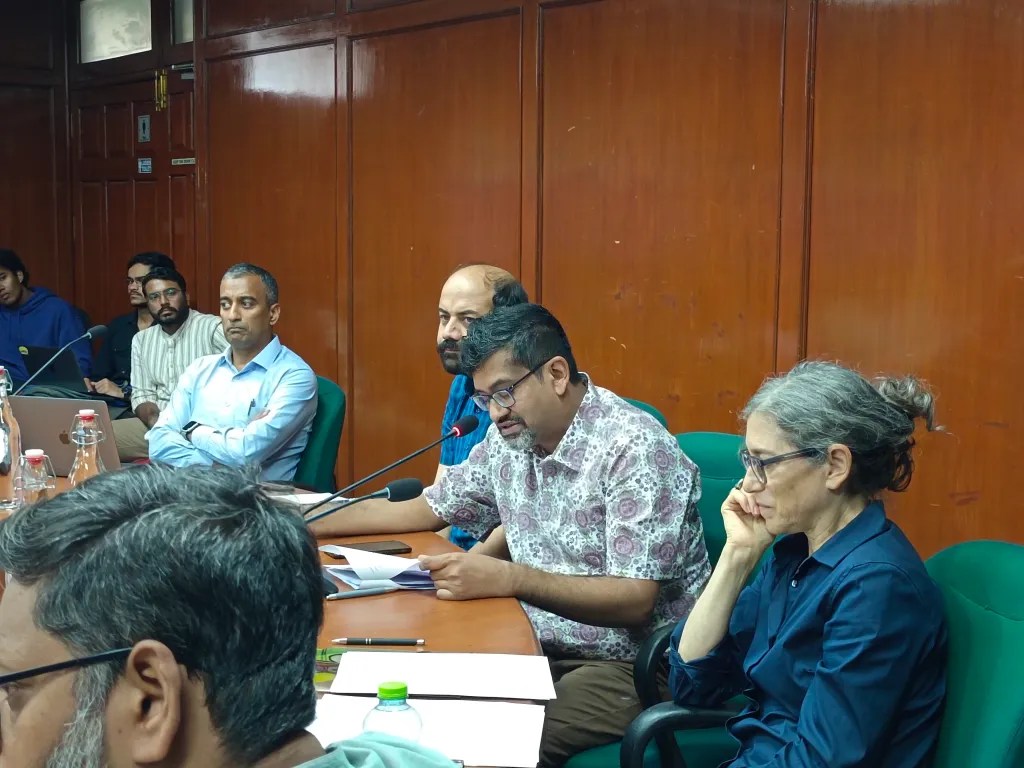

Day two of the Conference began with the panel, Minority Rights in Indian Constitutionalism, which was moderated by Anwesha Ghosh from NLSIU with Salmoli Choudhuri from NLSIU as discussant. It featured the following papers
The final panel of the Conference, Deliberative Institutions in Indian Constitutionalism, was held with Aishwarya Birla from NLSIU as the discussant and Megha Sharma from NLSIU as the moderator. The panel featured:
The panels were a curation of varied methods of engagement with the conference theme, across fields including law, politics, and history. The panels also featured early career researchers and established scholars, with the panels having been curated through a mix of invited presenters and accepted abstracts.
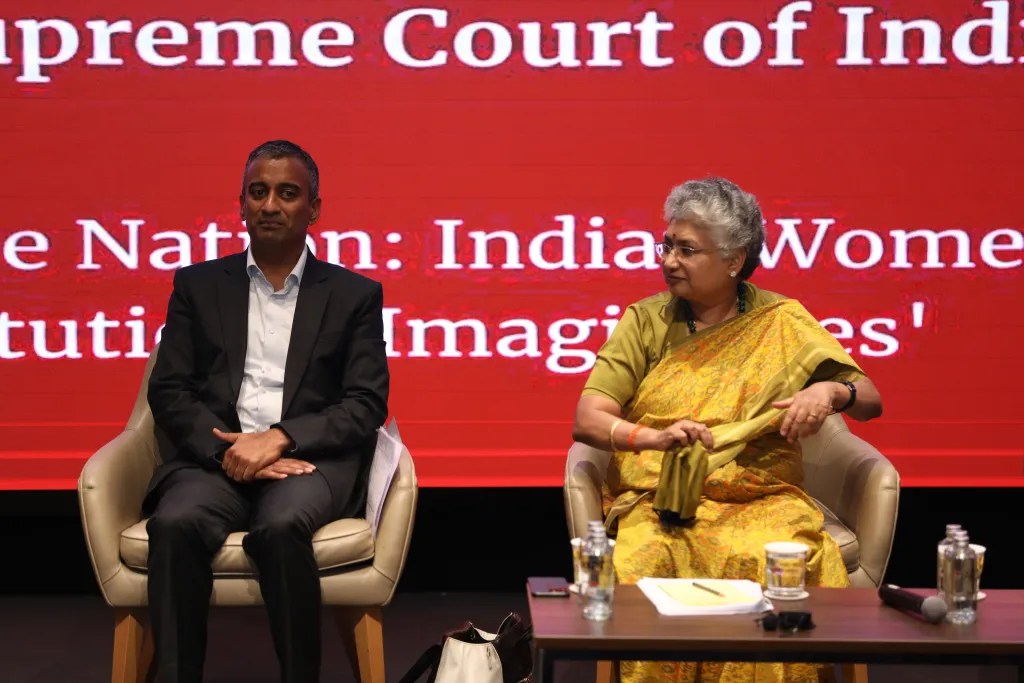
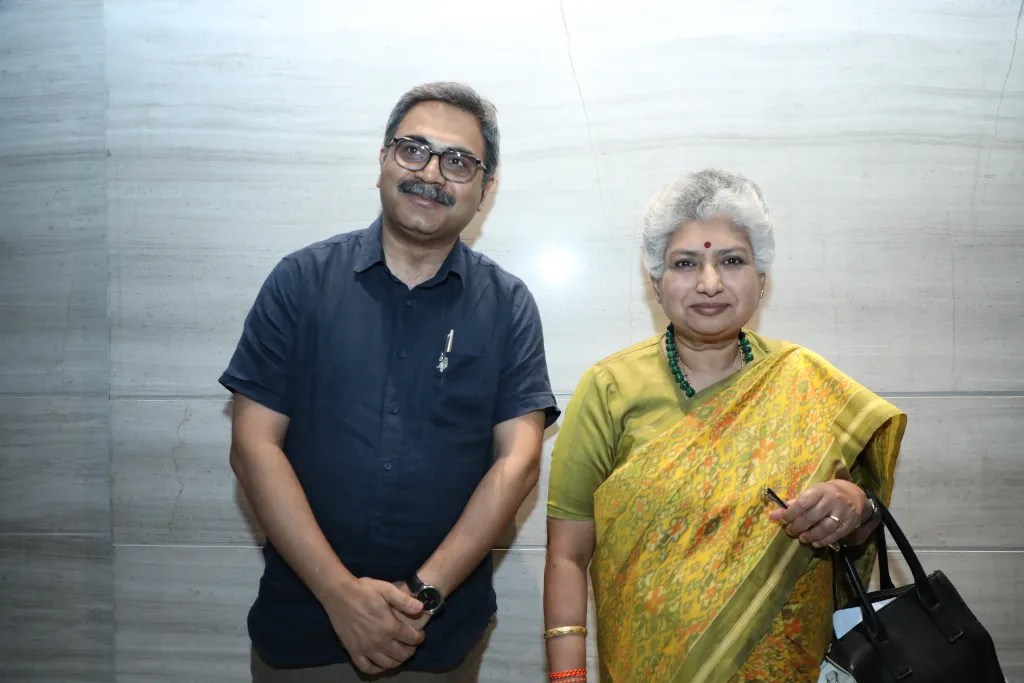
Justice BV Nagarathna, Justice of the Supreme Court of India gave the closing keynote. Her talk titled “Home in the Nation: Indian Women’s Constitutional Imaginaries” discussed the often overlooked role of women in the making of the Indian constitution. She also reflected on her own work as a judge in India. This was an especially meaningful engagement as Justice Nagarathna is slated to be the first woman Chief Justice of India, due to take charge in 2027.
Over the course of her keynote, Justice Nagarathna highlighted how the Indian women’s movement cultivated a transformative, yet pragmatic constitutional imagination. She discussed how constitutional semantics and design that we value today are products of a women’s movement which brought together the struggle to transform the private sphere, i.e. the home, with the transcendental quest for national enfranchisement and emancipation. She thus argued that Indian women’s participation in the Constituent Assembly has fundamentally impacted the Constitution’s transformative approach.
Justice Nagarathna built on the work of one of our panelists, Prof Achyut Chetan and his book Founding Mothers of the Indian Republic: Gender Politics of the Framing of the Constitution Justice Nagarathna invoked the women drafters of the Indian Constitution and their contributions as more than just traceable proposed provisions that found their way to the final text of the Constitution. This rich contribution was not limited to just constitutional text but also to international human rights. She emphasized that their efforts had not been limited to gender rights or women’s position in Indian society,
Justice Nagarathna stated that Indian constitutional democracy was not destined for greatness but had earned it. It was noted that in the arduous struggle to achieve the status of a mature democracy, the founding fathers and mothers had made countless sacrifices. She pointed out that every successive generation had contributed to building the great country. As part of the diverse landscape, she suggested that there should be introspection regarding whether the founding ideals had been securedto offer a template for discussions about creating a better future. She said that while the nation had come a long way, there was still a longer way to go before realizing all the ideals of the founders as they were envisioned.
Justice Nagarathna highlighted that it would be the Constitution that would act as a guiding force, touching, moving, and inspiring collective lives. It will serve as a permanent reminder that ideals of a more democratic, equal, just, and tolerant nation that remain an aspiration even in contemporary times. The valuable endeavors and efforts of the Founding Mothers need to be carried forward by every succeeding generation, not only of women but by all concerned.
Justice Nagarathna ended her keynote by invoking Smt. Hansa Mehta’s profound thoughts during the closing discussions of the Constituent Assembly on 22nd November 1949;
“The goodness or badness of a constitution depends on how it is going to work. If it works in the interests of the people, it will be a good Constitution; if it works otherwise, it will be a bad Constitution. It is for the future electors to elect the right kind of persons, who will work the Constitution in the interests of the people. The responsibility, therefore, lies with the people.”



The Hindu
Cases against Governors in Supreme Court is a sad story on their Constitutional position in India: Justice B.V. Nagarathna
https://www.thehindu.com/news/national/karnataka/cases-against-governors-in-supreme-court-is-a-sad-story-on-their-constitutional-position-in-india-justice-bv-nagarathna/article68482461.ece
Deccan Herald
Justice Nagarathna advocates for laws supporting motherhood and employment
The Indian Express
Some Governors playing a role where they shouldn’t, inactive where they ought to be active: SC judge B V Nagarathna
https://indianexpress.com/article/political-pulse/some-governors-playing-a-role-where-they-shouldnt-inactive-where-they-ought-to-be-sc-judge-b-v-nagarathna-9493426/
The Times Of India
Some governors do what they shouldn’t, says Supreme Court judge
https://timesofindia.indiatimes.com/city/bengaluru/some-governors-in-india-not-maintaining-expected-neutrality-says-sc-judge/articleshow/112272317.cms
Hindustan Times
Some governors are playing a role where they ought not to: Supreme Court judge
Bar and Bench
Governors playing a role where they ought not; inactive where they ought to be active: Justice BV Nagarathna. In March too, Justice Nagarathna called for Governors to act in line with the Constitution, rather than be told what to do and what not to.
https://www.barandbench.com/news/governors-inactive-supreme-court-justice-bv-nagarathna
LiveLaw
Unfortunate That Some Governors Are Playing A Role Where They Should Not : Justice BV Nagarathna
https://www.livelaw.in/top-stories/unfortunate-that-some-governors-are-playing-a-role-they-should-not-justice-bv-nagarathna-265619
Jagran English
States Vs Governors ‘A Sad Story’: SC Judge B V Nagarathna Expresses Concern Over role of Guvs, Court Cases Against Them
Crosstown News
Cases against Governors in Supreme Court a sad story on their Constitutional position : Apex Court Judge
https://www.crosstownnews.in/post/132886/cases-against-governors-in-supreme-court-a-sad-story-on-their-constitutional-position-in-india-apex-court-judge.html
ABP News
राज्यपालों पर SC के जज की कड़ी टिप्पणी! कहा- जहां काम करना चाहिए, वहां नहीं करते
SC Judge Justice BV Nagarathna: कई राज्यों ने राज्यपालों के काम को लेकर सुप्रीम कोर्ट का रुख किया है. वहीं, जस्टिस बीवी नागरत्ना ने भी एक कार्यक्रम में टिप्प्पणी की है.
Vartha Bharati
Some governors doing what shouldn’t be done, not doing what’s needed: Justice Nagarathna
https://english.varthabharati.in/india/some-governors-doing-what-shouldnt-be-done-not-doing-whats-needed-justice-nagarathna
Book panel hosted by the PACT project.
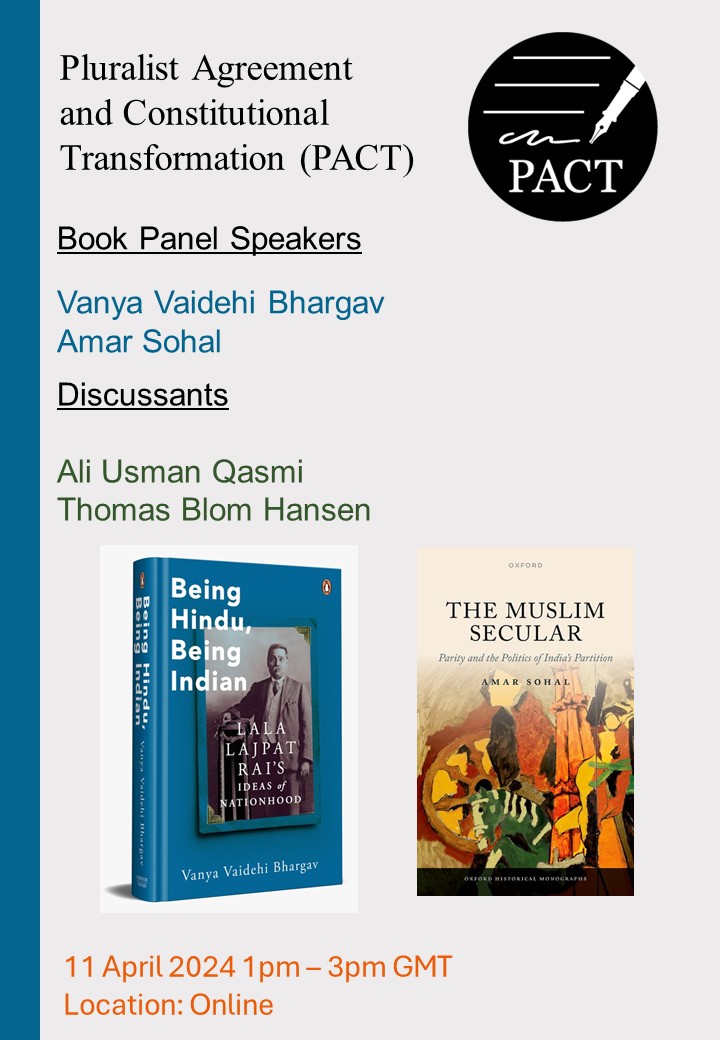
Book panel hosted by the PACT project.

Book Panel hosted by the PACT project.
Book Panel hosted live at National Law School of India by the PACT project.
Speaker: Matthew John (Author)
 Pluralist Agreement and Constitutional Transformation