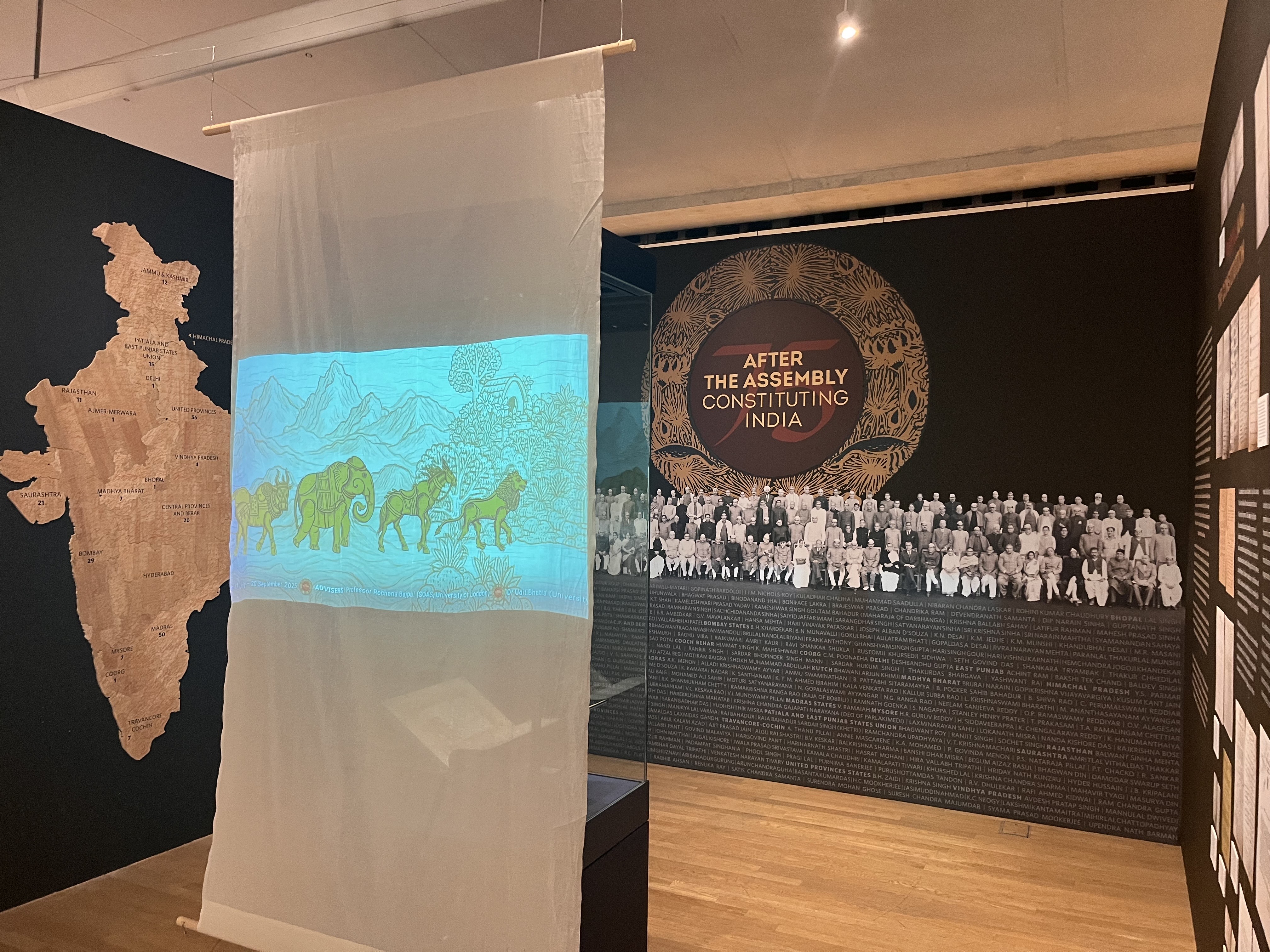
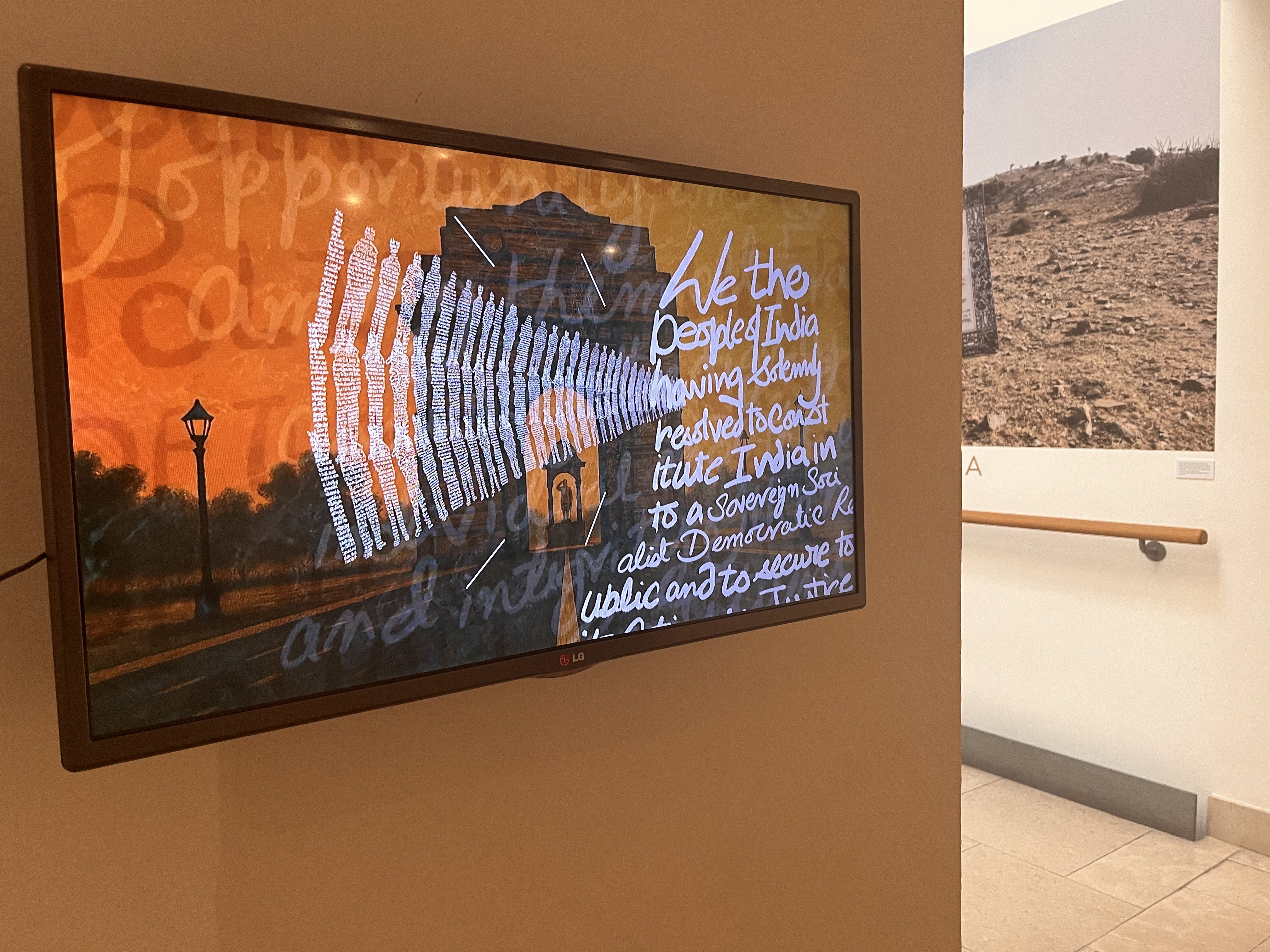
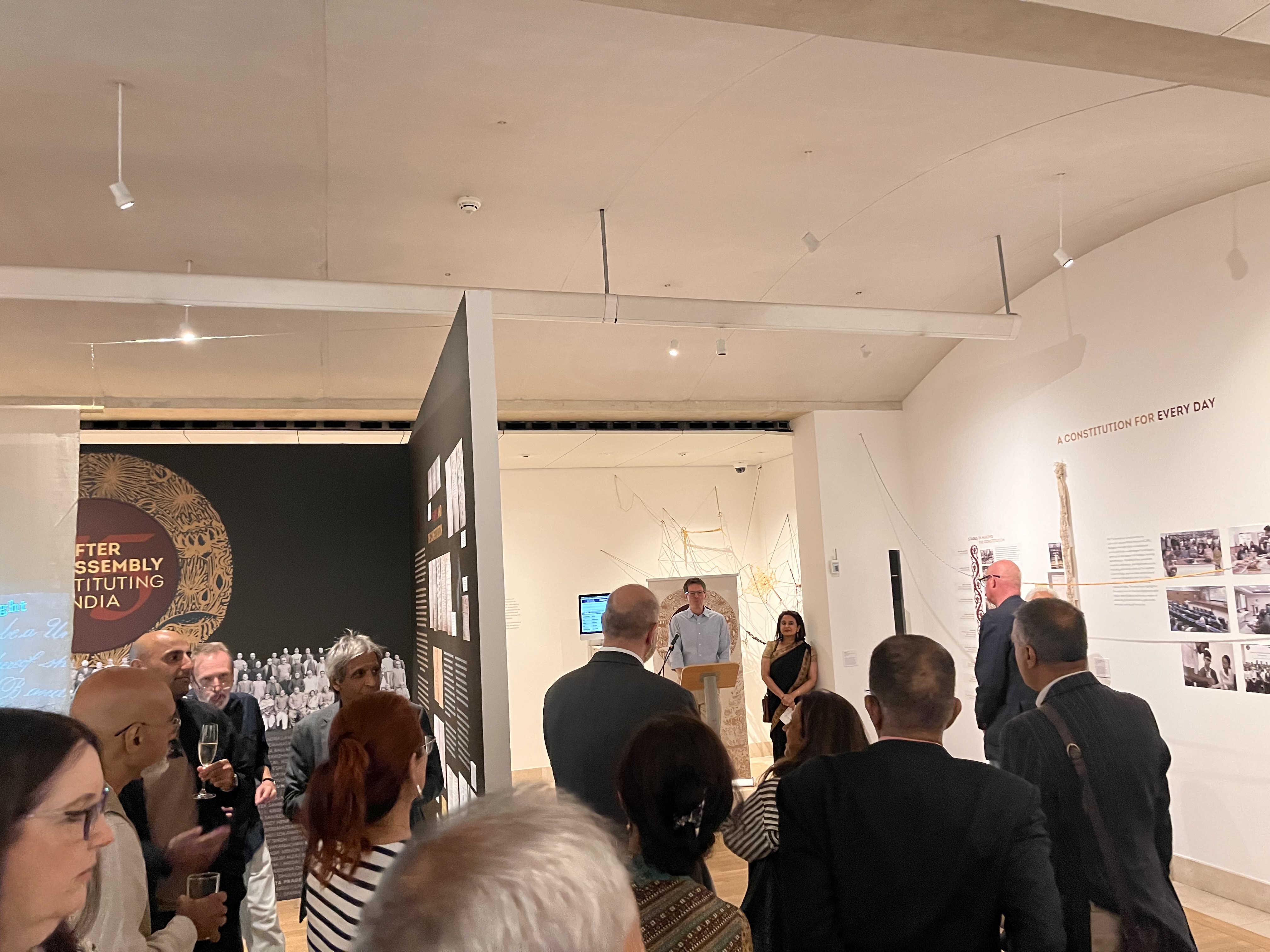
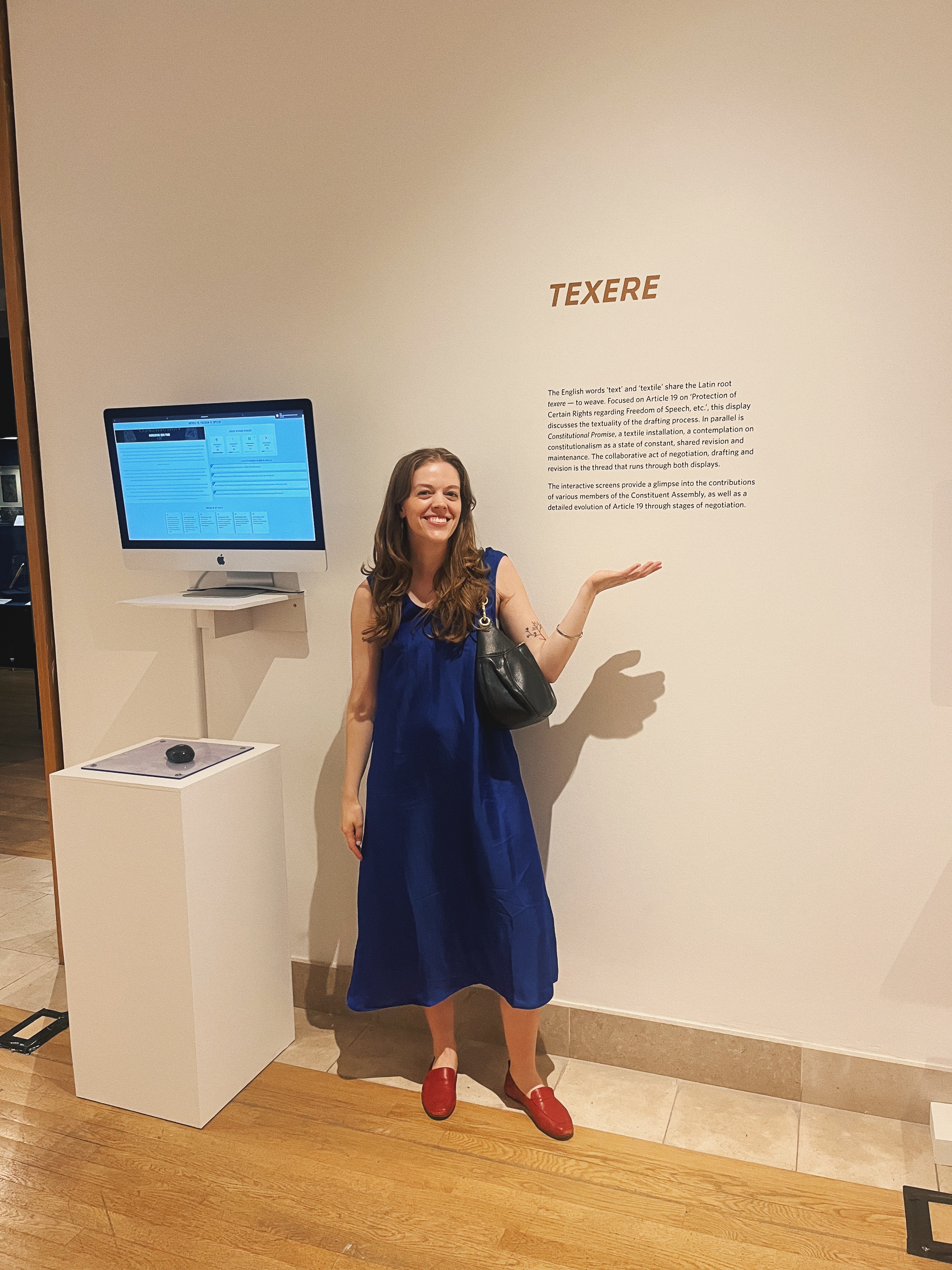
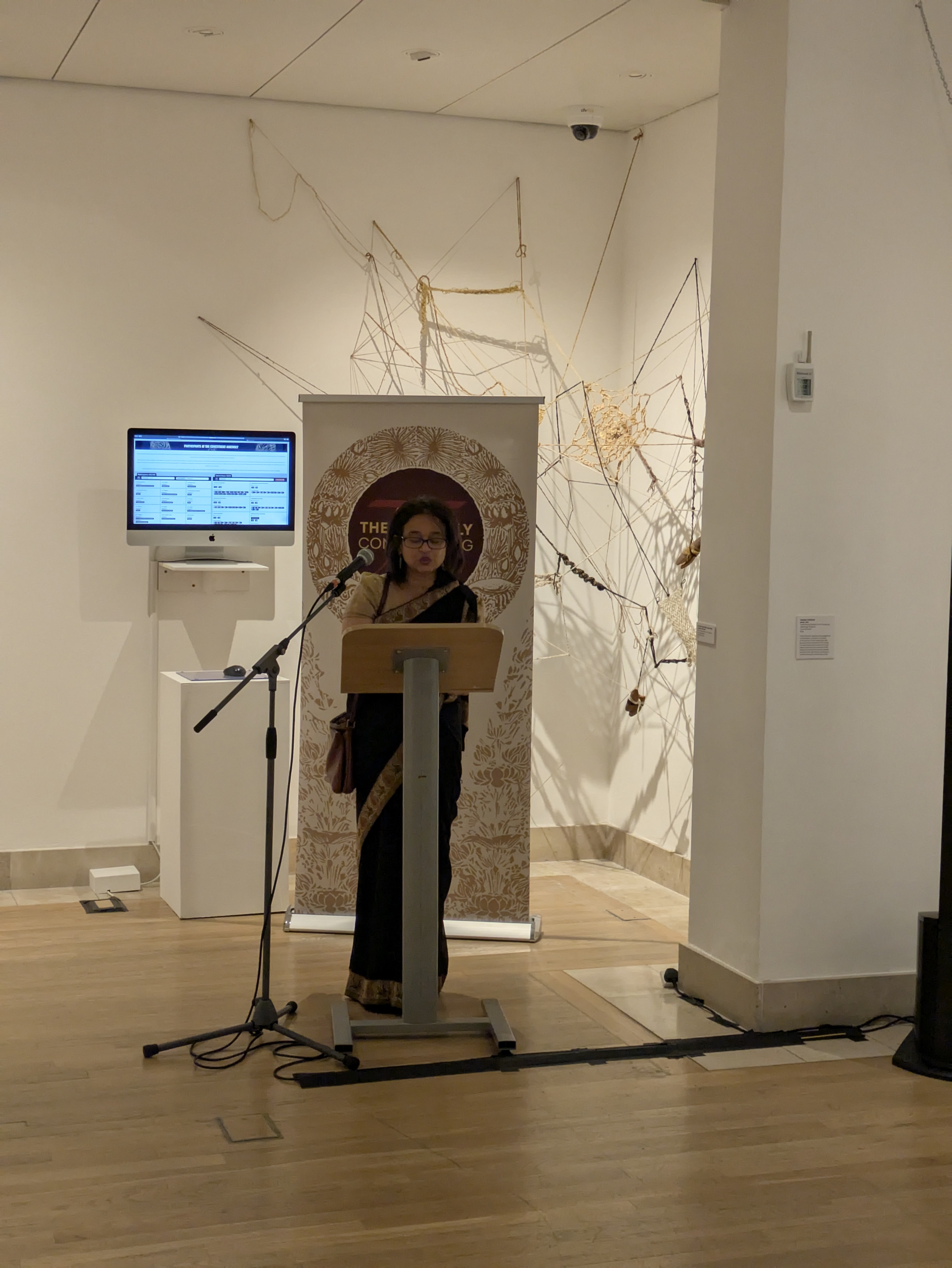
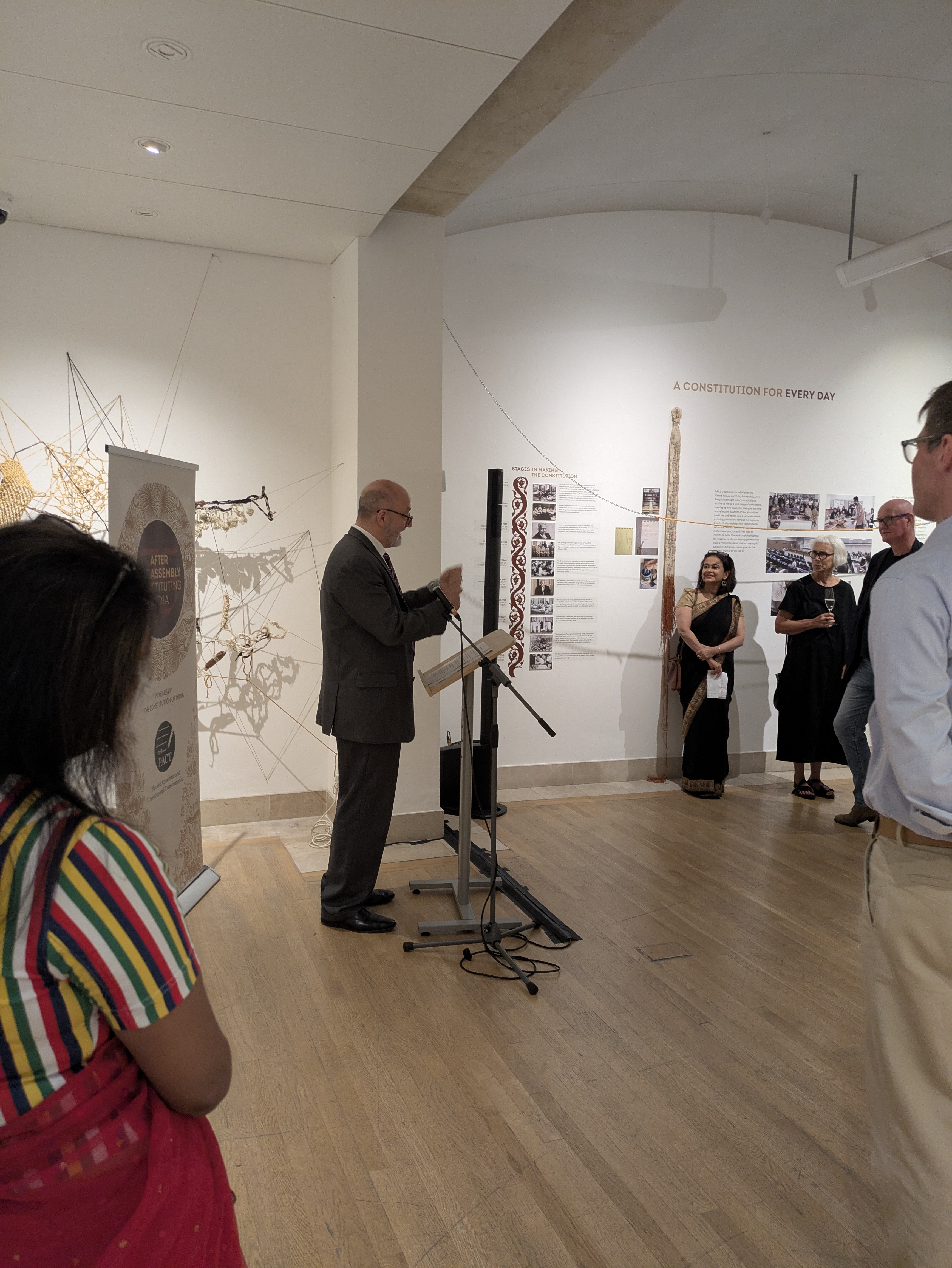
On 22 July, the SOAS Gallery hosted the launch of After the Assembly: Constituting India, an exhibition produced by Pluralist Agreement and Constitutional Transformation (PACT) to mark 75 years of the Indian Constitution. Drawing on archival materials, research collaborations, and contemporary artistic responses, the exhibition invites reflection on how India’s Constitution was debated, drafted, and continues to be re-imagined Speaking at the inauguration, SOAS Director Professor Adam Habib and LSE President Professor Larry Kramer both emphasised the importance of revisiting constitutional histories at a time when their meaning and ownership remain under contestation. Professor Rochana Bajpai, Principal Investigator, PACT spoke of the exhibition’s aims to focus attention on the process of the making the Indian constitution, going beyond the role of founding fathers, and constitution-making as anongoing conversation across generations, involving political elites as well as ordinary citizens.
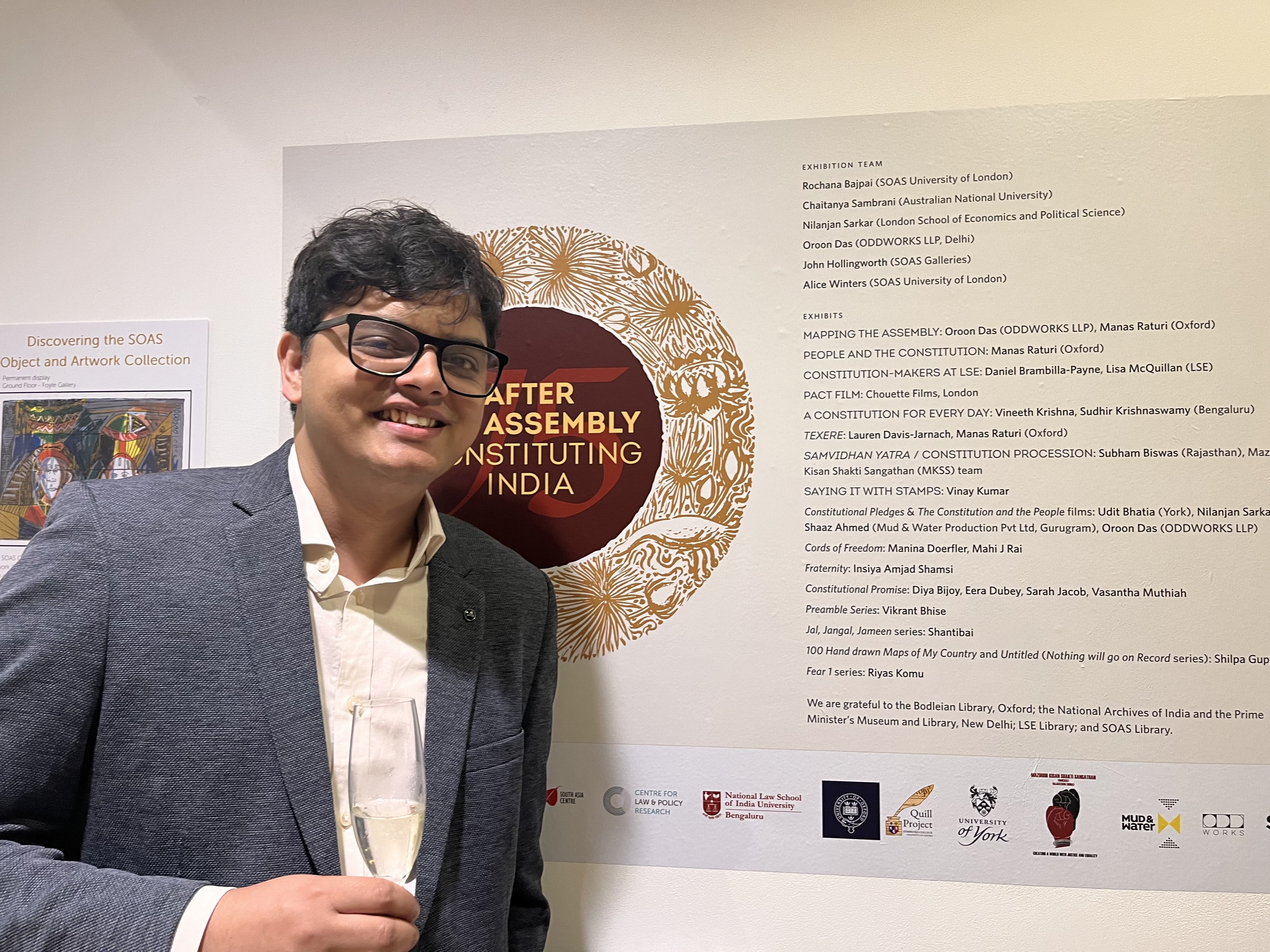
The exhibition was curated by a team comprising Professor Rochana Bajpai (SOAS), designer Oroon Das (New Delhi), Dr Nilanjan Sarkar (Deputy Director, LSE South Asia Centre) and Dr Chaitanya Sambrani (Australian National University). Research and creative contributions came from across the PACT partnership, including Dr Lauren Davis, Dr Manas Raturi and Dr Nicholas Cole, University of Oxford; Dr Udit Bhatia, University of York; Vineeth Krishna the Centre for Law and Policy Research (Bangalore), and Professor Sudhir Krishnaswamy, the National Law School of India University, The exhibition featured animation films by Shaaz Ahmed and purpose made prints by the artists Vikrant Bhise, Shilpa Gupta, Riyas Komu and Shantibai.
Among the materials on display are petitions, letters, and correspondence submitted by citizens and civil society organizations to the Constituent Assembly (1946–49),.and a new digital platform that makes the plenary and committee debates of the Assembly accessible together for the first time. Items from LSE Library’s archives further highlight the role of South Asian thinkers and political leaders connected to London in the early twentieth century, notably Dr B.R. Ambedkar.
Rather than presenting the Constitution as a fixed artefact, After the Assembly situates it as a living document shaped by diverse voices, then and now. Through archival and artistic lenses, it demonstrates how India’s Constitution was forged amidst profound disagreement, and how its interpretation continues to evolve through scholarship, activism, and cultural production.
The exhibition runs at SOAS Gallery, Brunei Gallery (Russell Square, London), from 17 July to 20 September 2025. Free entry, open Tuesday–Saturday 10:30–17:00, with late opening on Thursdays until 20:00.
As the Supreme Court of India marked its 75th anniversary this year and journeys into its 76th year, it is fitting to examine how constitutional history continues to shape and inform contemporary jurisprudence. The Court, which replaced the colonial Federal Court of India and the Judicial Committee of the Privy Council in 1950, has consistently demonstrated the relevance of historical context in constitutional interpretation. This article analyzes three landmark judgments from 2024 that significantly relied on constitutional history to address complex legal questions concerning citizenship, parliamentary privileges, and affirmative action. These landmark judgments of 2024 demonstrate the Supreme Court’s commitment to grounding contemporary constitutional interpretation in historical context, anapproach which continues to provide crucial insights for addressing modern constitutional challenges. .
The Citizenship Question: Section 6A of the Citizenship Act 1955
The Supreme Court’s examination of the National Register of Citizens (NRC) and Section 6A of the Citizenship Act represented a crucial intersection of constitutional history and contemporary challenges. The case, decided in October 2024, centered on the validity of provisions affecting citizenship in Assam, particularly concerning immigrants from Bangladesh after March 24, 1971.
The constitutional bench’s 4:1 majority judgment upholding Section 6A’s constitutionality demonstrated the enduring relevance of the Constituent Assembly’s deliberations on citizenship. The Court emphasized the historical context’s significance, noting that citizenship questions in India are inextricably linked to Partition history. As the majority opinion observed:
“Prior to examining the contentions articulated by the parties on the constitutionality of the provision and engaging in a discussion on the various legal issues involved, it is imperative to trace the history of this matter and have a holistic understanding of how the provision, Section 6A, came into being.”
“Except one other Article in the Draft Constitution, I do not think that any other article has given the Drafting Committee such a headache as this particular article. I do not know how many drafts were prepared and how many were destroyed as being inadequate to cover all the cases which it was thought necessary and desirable to cover.”
Parliamentary Privileges: Sita Soren v Union of India
The March 2024 judgment in Sita Soren v Union of India marked a significant reinterpretation of parliamentary privileges and immunity. The seven-judge bench unanimously overruled the P.V. Narasimha Rao decision, establishing that Articles 105(2) and 194(2) do not protect acts of bribery under parliamentary immunity.
In reaching this conclusion the court undertook a detailed analysis of the history of parliamentary privileges (Part E). This inquiry began with the Government of India Act 1833, where legislatures had special facilities, including providing complete information on the subject of the legislation, the right to be present in all meetings of the Council of the Governor-General, freedom of speech, and freedom of voting. The evolution of parliamentary privileges, with this starting point, was traced through the Charter Act of 1853, the Indian Council Act of 1861, and the Government of India Acts of 1909, 1919, and 1935. Beyond these legislations, references were also made to the Reforms Committee of 1924, which suggested that certain additional privileges be granted to Indian Legislatures. The committee further recommended introducing a penal provision for influencing votes within the legislature through inter alia bribery. This resulted in the government introducing the Legislative Bodies Corrupt Practices Bill, which although ultimately lapsed, proposed to penalise (i) the offering of bribe to a member of a legislature in connection with his functions; and (ii) the receipt on demand by a member of the legislature of a bribe in connection with his functions.
The privileges across these acts were said to not be a blanket immunity from criminal law. Despite colonial resistance, the demand for parliamentary privileges in India was consistently linked to their relevance to the responsibilities Indian legislators aimed to fulfill. (para 59). It was this pre constitutional background that was said to inform the vision of the Constituent Assembly pertaining to Articles 105 and 194 of the Constitution.
Affirmative Action: State of Punjab v Davinder Singh
In August 2024, the Supreme Court addressed the complex issue of sub-classification within Scheduled Caste categories. The seven-judge bench’s 6:1 majority decision drew heavily on historical sources to understand the heterogeneity within Scheduled Castes. Both the majority opinion and the dissenting opinion relied on the Constituent Assembly Debates to analyse Article 341 of the Constitution – Scheduled Castes. Draft Article 300A (corresponding to Article 341 of the Constitution of India, 1950) was not included in the Draft Constitution of 1948. It was introduced by the Chairman of the Drafting Committee on 17 September 1949. This provision authorized the President to identify and designate castes, races, or tribes as ‘Scheduled Castes’ through a public notification, following consultation with the Governor of a State. Additionally, it granted Parliament the authority to modify the President’s notification by including or excluding any caste, race, or tribe through legislation.
The Court’s analysis referenced Dr. B.R. Ambedkar’s explanation in the Constituent Assembly regarding Article 341:
“The only limitation that has been imposed is this: that once a notification has been issued by the President… thereafter, if any elimination was to be made from the list so notified or any addition was to be made, that must be made by Parliament and not by the President. The object is to eliminate any kind of political factors having a play in the matter of the disturbance in the Schedule so published by the President.”
Beyond references to constitutional history, the decision of the court also undertook a historical analysis to gather evidence of backwardness within the Scheduled Castes. This historical injustice of untouchability was a major factor considered in arriving at the outcome of the case. The historical material used to analyse heterogeneity and intelligible differentia began with the definition of depressed classes as raised in 1916 in the Legislative Council, and surveyed developments in the 1919 Southborough Franchise Committee, the 1931 Hutton Census Report, Report of the Indian Franchise Committee (1932) Vol I, the Minutes of dissent by Mr SB Rambe, Mr CY Chintamani, Mr RR Bakhale, Report of the Franchise Committee, the Government of India (Scheduled Castes) Order 1936, and the Constitution (Scheduled Castes) Order 1950.
Conclusion
These landmark judgments of 2024 illustrate the enduring relevance of constitutional history in contemporary judicial decision-making. The Court’s deep engagement with historical materials – from Constituent Assembly Debates to colonial legislation – is crucial for illuminating present-day constitutional challenges. Each case examined here dealt with fundamental aspects of Indian democracy: citizenship rights in an era of migration, the boundaries of parliamentary privilege in face of corruption, and the evolving interpretation of affirmative action policies. The historical analysis employed in these judgments serves multiple purposes. It provides a context for understanding the constitutional provisions, helps trace the evolution of legal principles through time, and ensures that contemporary interpretations link to the Constitution’s fundamental principles while adapting to modern challenges.
On Dr. B.R. Ambedkar’s birth anniversary, we reflect on his critical role in shaping modern India’s constitutional vision. Among his many contributions, the 1930 A Scheme of Political Safeguards for the Protection of the Depressed Classes, co-authored with Rao Bahadur R. Srinivasan and submitted at the First Round Table Conference, deserves far more recognition than it typically receives. This document laid out a strikingly forward-thinking framework for Dalit rights and continues to resonate in contemporary debates around caste, representation, and equality.
The Scheme outlined eight key provisions (‘conditions’) aimed at ensuring the political and social empowerment of the Dalit community. These were not parsed as abstract ideals but aimed building specific legal and institutional safeguards designed to correct centuries of structural marginalisation. Central to the proposal was the demand that the Dalit community be treated as a distinct political entity with guaranteed rights, rather than as a social category passively assimilated into the nationalist project.
The scheme opens with striking clarity and force, setting the tone for what follows:
“The Depressed Classes cannot consent to subject themselves to majority rule in their present state of hereditary bondsmen… The Depressed Classes must be made free citizens entitled to all the rights of citizenship in common with other citizens of the State.”
What follows, then, is a legal provision effectively calling for the abolition of untouchability and the full recognition of members of the Dalit community as equal citizens. This anticipates Article 17 of the Constitution and stands as one of the earliest efforts to link Indian social reform to enforceable legal and constitutional norms in the context of Dalit rights. The scheme makes clear that legal equality alone is insufficient unless supported by affirmative duties on the part of the state—an argument that continues to be central to contemporary constitutional jurisprudence.
Another major concern addressed in the scheme is the practice of social and economic boycotts. The scheme proposed that these forms of coercion be explicitly criminalised, even detailing specific acts that should attract penal sanctions. This foresight anticipates later legislative interventions such as the Protection of Civil Rights Act (1955) and the Scheduled Castes and Scheduled Tribes (Prevention of Atrocities) Act (1989). Ambedkar and Srinivasan demonstrate a clear understanding that social exclusion operates not only through overt discrimination but also through informal economic and cultural sanctions. A similar provision was later included in States and Minorities 1947, submitted to the Constituent Assembly, but it too was excluded from the final Constitution—though statutory provisions would eventually address the issue. Ambedkar’s recognition of the widespread nature of this practice was remarkably prescient; even today, social and economic boycotts remain a powerful tool of oppression against marginalised communities. He was among the earliest thinkers to argue that such practices should be explicitly named and tackled through constitutional provisions and the force of law.
In one of its most historically controversial yet crucial provisions, the scheme calls for separate electorates for the Depressed Classes—a demand that would shape much of Ambedkar’s constitutional efforts in the decades to follow. He viewed it as a necessary safeguard to secure genuine political representation, particularly given the entrenched dominance of upper-caste interests in existing political institutions. The demand sparked intense debate, culminating in the Poona Pact of 1932, but its underlying logic remains relevant: without independent political agency, formal inclusion risks becoming mere tokenism.
The scheme called for proportional representation in legislatures, cabinets, and public services. What is noteworthy is the insistence on not only representation but adequate representation—emphasising both quality and quantity. This emphasis prefigures the later policy of reservations, but with a broader focus on structural access to power, not just numerical quotas.
The scheme is also remarkable for its engagement with comparative legal frameworks. It references American civil rights legislation and Burmese laws against social boycotts, showing that Ambedkar and Srinivasan were thinking beyond India’s immediate context. Their approach positions Dalit rights within a broader international discourse on minority protection and democratic equality. In doing so, the scheme not only asserts a claim to justice within India but also aligns that claim with global constitutional developments.
Despite its clarity and foresight, the scheme has remained largely marginal in mainstream constitutional history. This is likely because later documents like States and Minorities received more attention and overshadowed it. Nevertheless, the legal and political vision articulated in the scheme has been quietly absorbed into key features of India’s constitutional framework. Articles 15 and 17, along with the broader system of affirmative action, all bear the imprint of principles first articulated in this early document.
Revisiting the scheme today is not merely a historical exercise. Many of the conditions it addresses—social exclusion, underrepresentation, and legal impunity—persist in different forms. The document reminds us that equality requires more than declarations: it must be structured into the political, legal, and institutional foundations of the state.
In sum, A Scheme of Political Safeguards is one of the earliest and most comprehensive articulations of Dalit constitutionalism. It demonstrates the far-sightedness of Dr Ambedkar’s legal imagination well before the drafting of the Constitution. His insistence on enforceable rights, robust representation, and institutional accountability outline a vision for a radically inclusive democracy. As we mark Dr Ambedkar’s birth anniversary, this scheme invites us to see constitutional democracy not as a finished project but as a continuous struggle—one rooted in the demands first made by those most excluded from power.
In that spirit, this moment offers an opportunity to think more expansively about Indian constitution-making itself—not as a one-time event, but as a living, evolving process and an ongoing conversation across time. This is the central premise of the PACT project which will host a conference on the theme of Indian Constitution-Making as Ongoing Conversation. More information on the project and the conference call for abstracts is available here.
In recent years, the Indian Constitution has become both a site of contestation between various political parties and a symbol of civil resistance against the state. Prior to 2019, the Indian Constitution remained relatively obscure in public discourse, despite shaping everyday life in fundamental ways. However, the widespread public protests against the Citizenship (Amendment) Act, 2019 brought the Indian Constitution to the forefront of public and media conversations.[1] For Arvind Elangovan, these developments highlight the significance of the Indian constitution in its political articulation – a process which invites an understanding of the text that extends beyond a purely legal and normative interpretation.
A recent development in this process of political articulation is the museumisation of the Indian constitution. Lately, we have seen a proliferation of several exhibitions, galleries and museums that have come up to showcase the Indian constitution as a cultural artifact of national heritage. Several initiatives illustrate this trend. In August 2021, the Ministry of Information & Broadcasting, as part of the ‘Azadi Ka Amrit Mahotsav’ programme, launched a series of e-photo exhibitions, including one on the making of the Indian Constitution. In 2022, the new Pradhanmantri Sangrahalaya was opened to the public as part of the newly reconstituted Prime Ministers’ Museum and Library (PMML, earlier the Nehru Memorial Museum & Library, the NMML) with its ground floor reserved for a ‘Constitution Gallery.’ In November 2024, a Constitution Museum was inaugurated at the O.P. Jindal Global University by the Union Law Minister and Lok Sabha Speaker. Recently, a ‘Constitution Gallery’ was inaugurated at the Maha Kumbh mela – one of the most significant Hindu pilgrimage festivals – by the Uttar Pradesh government’s Parliamentary Affairs Minister.
The display of the Indian Constitution in curated spaces raises important questions. In the context of representation of tribals in post-colonial India, Neela Karnik reminded us that museums also shape “knowledge by constructing material things as objects and ordering these in taxonomies – of the ‘rational’ or the ‘truthful’.”[2] One might then ask: what frameworks does the state deploy in the exhibition of the Indian constitution in dedicated sites of public display?
A visit to the Constitution Gallery in the PMML serves as a good starting point. The gallery is situated in the historic Teen Murti Bhawan in Lutyens’ Delhi. Designed by British architect Robert Tor Russell, the Teen Murti Bhawan was originally built in 1930 as the Flagstaff House for the Commander-in-Chief of the British forces in South Asia and later became the residence of India’s first Prime Minister, Jawaharlal Nehru. After Nehru’s death in 1964, the complex was converted into a library and a museum – the NMML. In 2018, the government announced its plan to reconstitute it into the Prime Minister’s M…L and to expand its focus beyond Nehru to incorporate the legacy of all former Prime Ministers. When the new museum was opened up, it contained a ‘Constitution Gallery’ dedicated to the making of the Indian constitution.
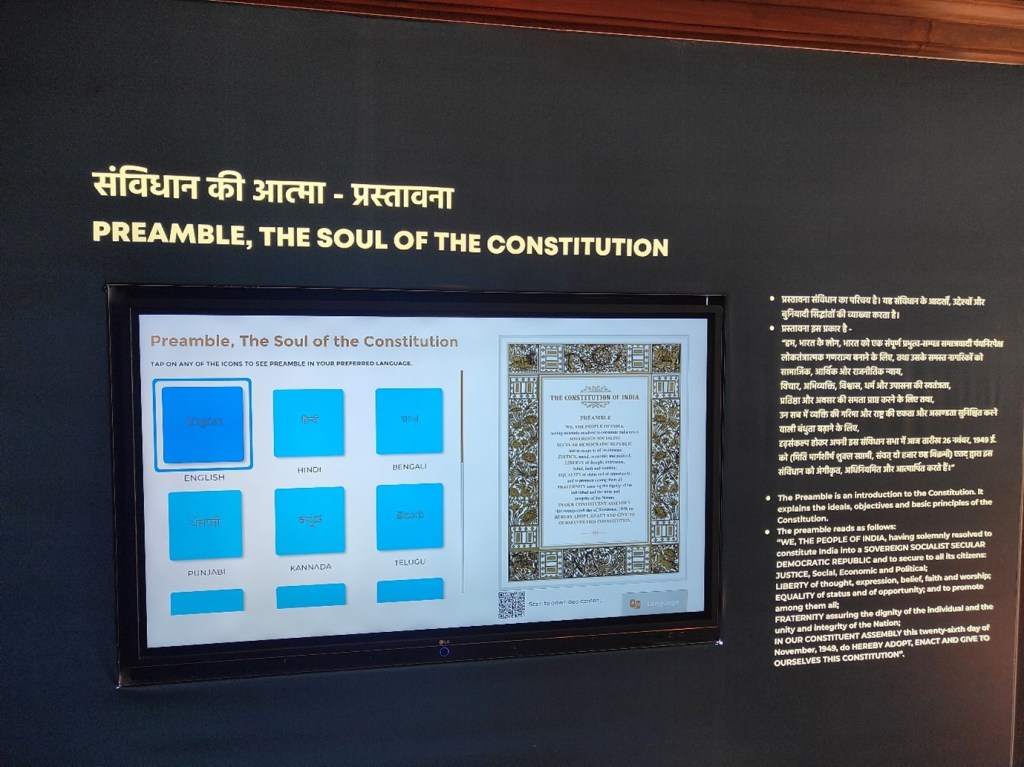
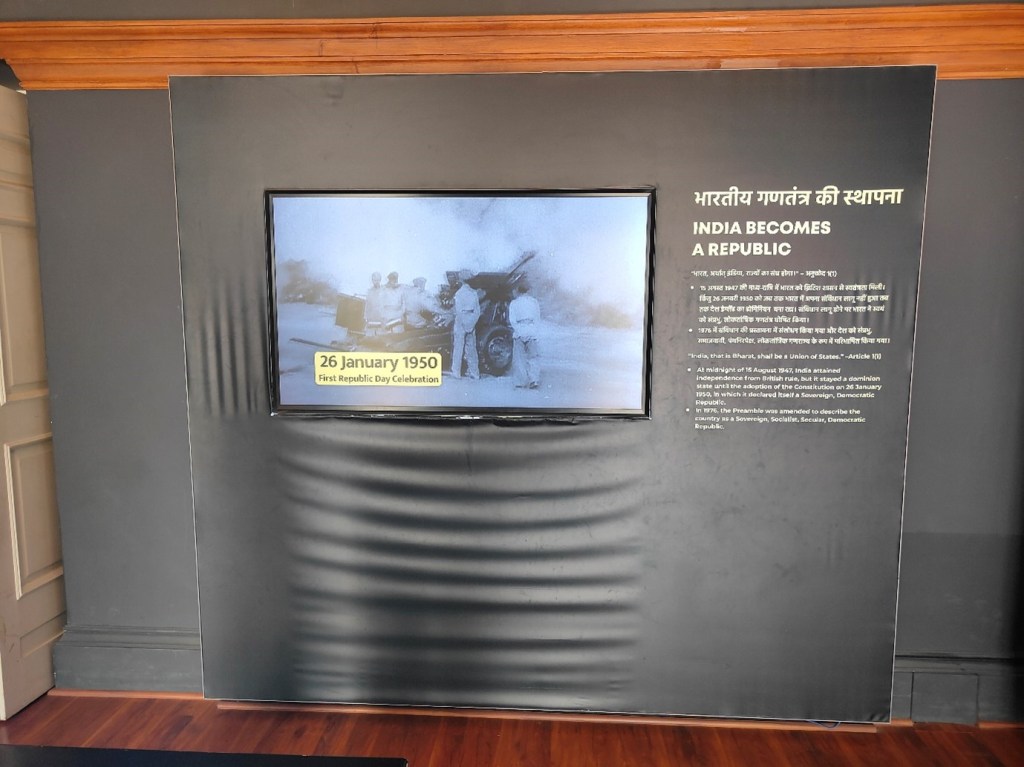
In its own words, the gallery intends to offer an ‘experiential’ view of the Indian constitution. Spread across different rooms, the gallery contains exhibits showcasing the Preamble of the Indian Constitution in multiple languages, alongside pictures and videos from the first Republic Day parade on 26 January 1950.
The Preamble in multiple languages (Source: clicked by author at the PMML)
Footage from the first Republic Day celebrations (Source: clicked by author at the PMML)
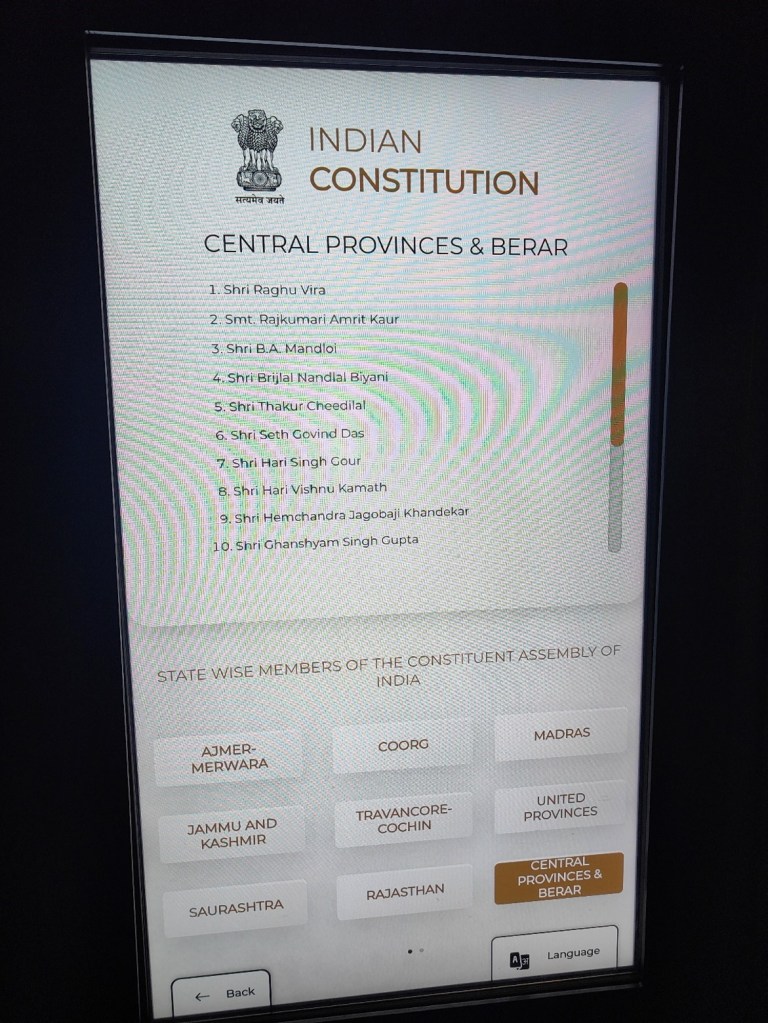
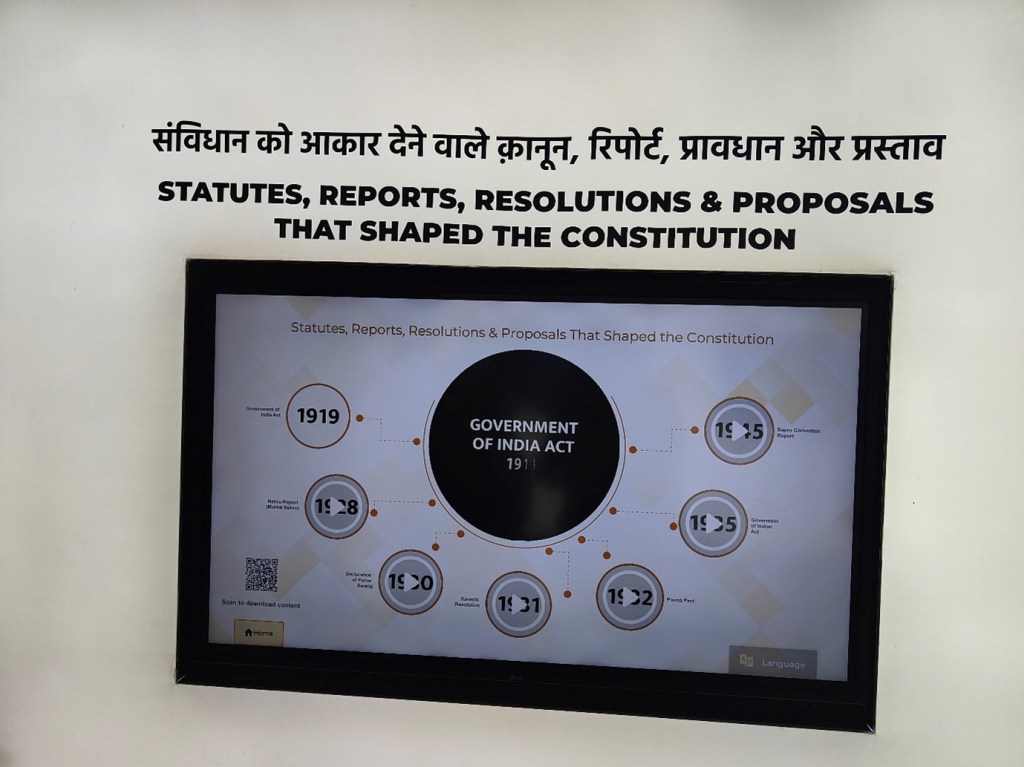
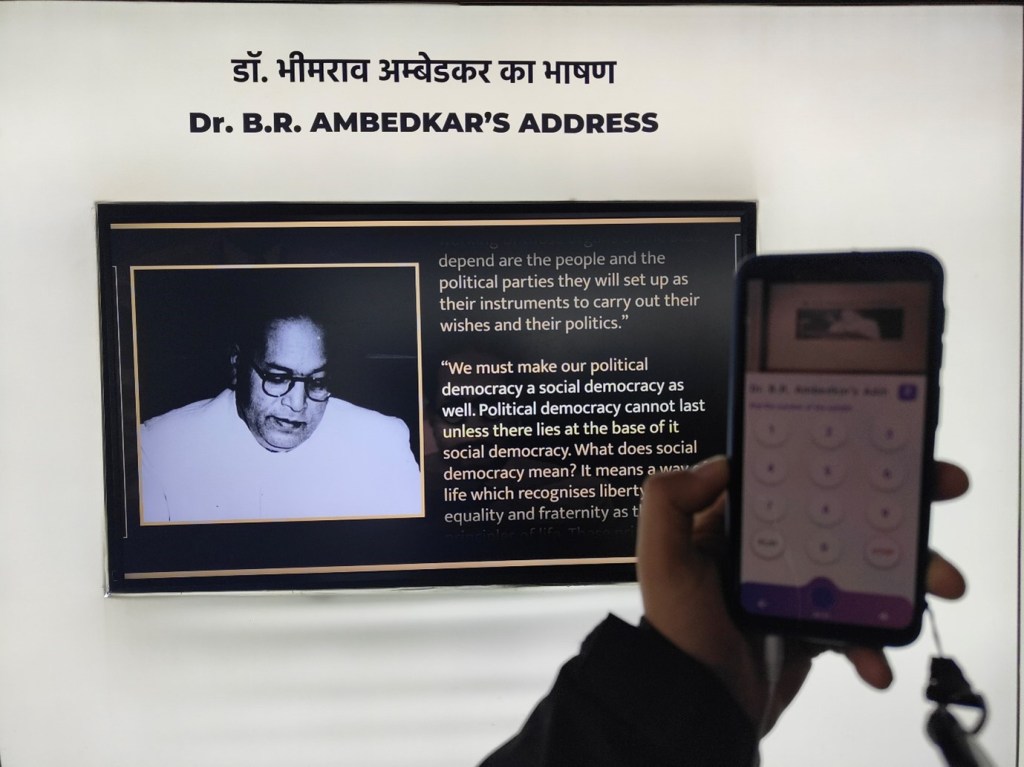
Visitors can view a digital display with the first edition of the Indian Constitution and explore its key features, such as the separation of powers or directive principles of state policy. Interactive screens provide a comprehensive list of Constituent Assembly members, their constituencies, and the various committees and subcommittees. A detailed timeline traces the significant statutes, reports, resolutions, and proposals that led to the formation of the Constituent Assembly, beginning with the Government of India Act of 1919 and to the 1945 Sapru Committee Report. It also highlights pivotal moments, such as Dr. B.R. Ambedkar’s address to the Constituent Assembly on 25 November 1949 and the first general elections in 1951. Additionally, a dedicated room focuses on the 105 amendments to the Indian Constitution up to 2021. These displays are accompanied with a physical audio guide the visitor can get to hear audio recordings playing in each of the rooms.
Details about the first edition of the Indian Constitution (Source: clicked by author at the PMML)
List of members of the Constituent Assembly of India and the constituencies they were elected from (Source: clicked by author at the PMML)
Details of different legislative reforms, reports and proposals that culminated into the making of the Constituent Assembly of India (Source: clicked by author at the PMML)
A room dedicated to some of the most significant constitutional amendments (Source: clicked by author at the PMML)
Dr. B.R. Ambedkar’s last speech in the Constituent Assembly of India and the audio guide (Source: clicked by author at the PMML)
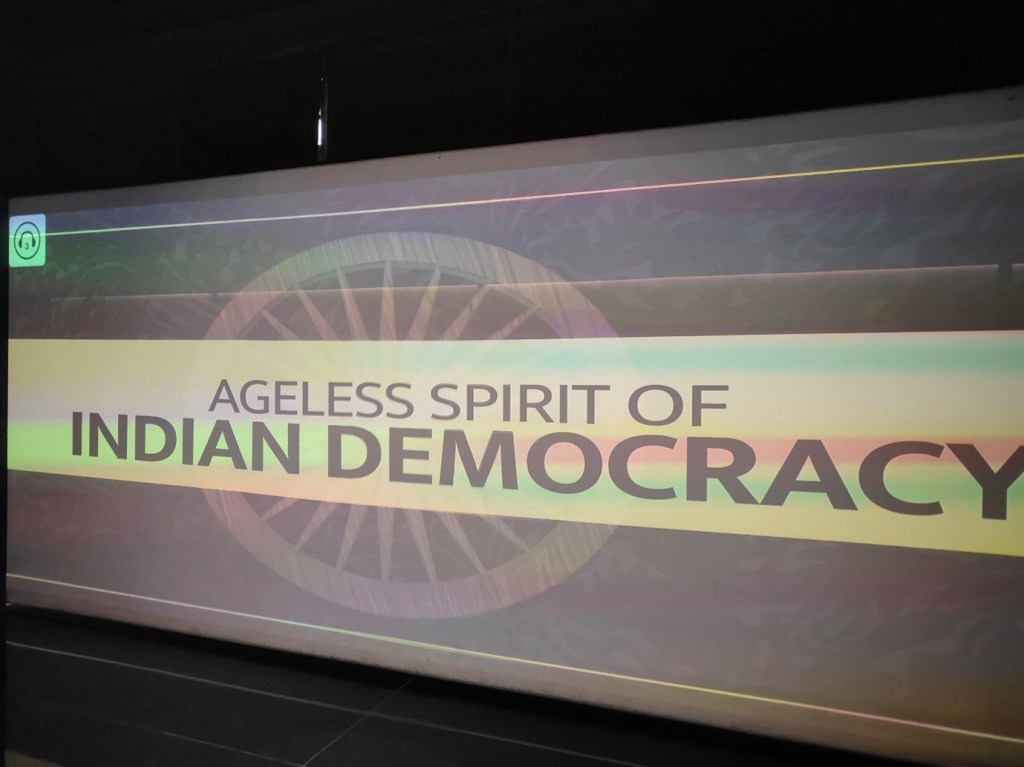
What merits attention are the different films being played in these rooms through which the Indian Constitution is portrayed as direct result of a seemingly continuous political tradition of democracy in India. The colonial rule is portrayed as a major disruption in an otherwise seamless history of democratic governance in the Indian subcontinent. Before the colonial presence, the pillars of democracy were firmly entrenched in this part of the world, the gallery tells us. In a room dedicated to ‘Makers of the Indian Constitution,’ for instance, a film shows a montage of images and videos to highlight the ‘ageless spirit of Indian democracy.’ The idea is to underline India as a historical site for deliberative assembly and popular participation through highlighting references from the Rig Veda and the presence of gana sanghas like that of the Shakyas and Licchavis.
A film that showcases how the roots of democracy were firmly entrenched in ancient India (Source: clicked by author at the PMML)
Whether these governing bodies and councils were indeed democratic or more aristocratic and oligarchic has been a point of scrutiny in scholarship.[3] Nevertheless, the description of Indian democracy as a historically continuous trend aligns neatly with the current representations of India in government discourse as a ‘mother of democracy’.[4] Through its ‘experiential’ setup, the gallery tells us that prior to colonial rule, the Indian subcontinent saw a flourishing tradition of freedom of religion, culture, art, linguistics and diverse belief systems. By framing the story of the Indian Constitution thus, the gallery links modern constitutional ideals with an ancient tradition of democracy in India. It suggests to visitors that the foundational principles of the Indian Constitution were deeply rooted in India’s ancient history.
It is important to remember that the Indian constitution emerged not only from a struggle against foreign colonial rule, but also from a confrontation with an internal feudal social order. The final text was far from a harmonious culmination representing continuity with ancient traditions. Rather it was the outcome of a series of contesting social struggles and political negotiations among widely contrasting groups – both within and outside the Constituent Assembly – regarding the future of the Indian society as a modern polity. In the process of its museumisation and elevation into a cultural artefact, we need to recall the Indian Constitution’s complicated history of a struggle against both external colonial forces and internal systems of oppression.
When the PMML was reopened in 2022, it garnered much debate on the possible revisionist tendencies to dilute the legacy of Nehru. But what perhaps deserves greater attention is this political articulation of the Indian Constitution through a narrative of seamless continuity between ancient democratic traditions and modern constitutional ideals. The Indian Constitution may not best be served by being portrayed as the inheritor of an unbroken civilisational legacy with its authority rooted in a mythologised past.
[1] Arvind Elangovan, ‘A political turn? New developments in Indian constitutional histories,’ in History Compass, Vol. 20, no. 8 (2022), e12746 [https://doi.org/10.1111/hic3.12746].
[3] See Romila Thapar, Early India: From the Origins to AD 1300 (Berkeley and Los Angeles: University of California Press, 2004), p. 147 and Eric W. Robinson, The First Democracies: Early Popular Government Outside Athens (Stuttgart: Franz Steiner Verlag, 1997), p. 23.










 Pluralist Agreement and Constitutional Transformation